
Culture as Security: Ukrainian Experts Brief International Partners on Cultural Challenges and Reforms During the War

On 1 December, at the final briefing of 2025 hosted by the Center for Civil Liberties, experts from the cultural and media sectors discussed the major wartime challenges facing Ukrainian culture — from the evacuation of museum collections to youth education and the role of media in preserving heritage. The event was supported by theEuropean Commission and gathered representatives of international institutions, diplomats, and Ukraine’s partners.
Since the beginning of Russia’s full-scale invasion, Ukraine’s cultural heritage has been systematically destroyed, stolen, and appropriated. On the temporarily occupied territories, 40 Ukrainian museums have already been illegally declared part of the “Russian cultural fund.”
At the same time, Ukrainian civil society continues to play a critically important role in monitoring, reforming, and developing cultural policy — even during wartime.
Evacuations and Sanctions: What Has Been Achieved in 2025
Co-founder of the Coalition of Culture Actors and head of DOFA Fund Olga Sagaidak presented an overview of developments in the sphere of cultural heritage.
“At the beginning of the year, around half a million museum items had been evacuated. Now it is 670,000. That is only about one hundred thousand additional items in a year — and this process is still far too slow,” she noted.
The reasons include inconsistent decisions by local authorities, lack of regulation, and limited resources.
According to Sagaidak, in 2025:
- a new evacuation procedure was developed with the participation of expert organisations;
- the launch of the Ukrainian Cultural Heritage Fund, based in Brussels, was announced;
- Ukraine adopted its first-ever National Strategy for Culture, which includes concrete KPIs through 2027.
She also emphasised an important result of international pressure:
“Fifteen Russian museum directors have been added to Ukraine’s sanctions list for using looted Ukrainian artefacts. Each name is documented and verified,” she said.
Youth and the Future: Emigration or Hope?
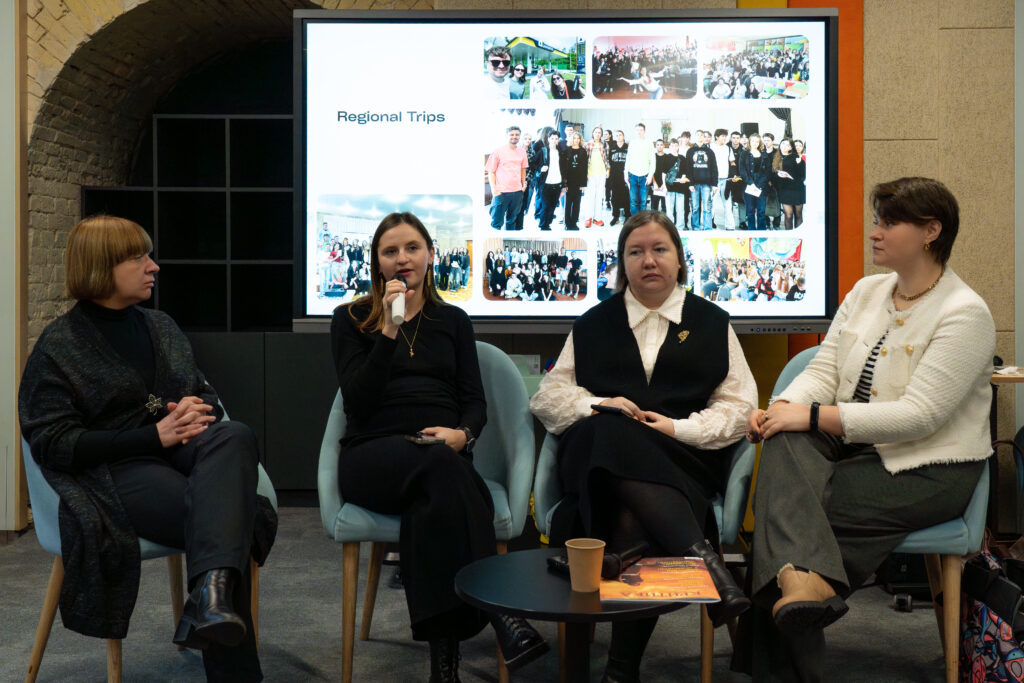
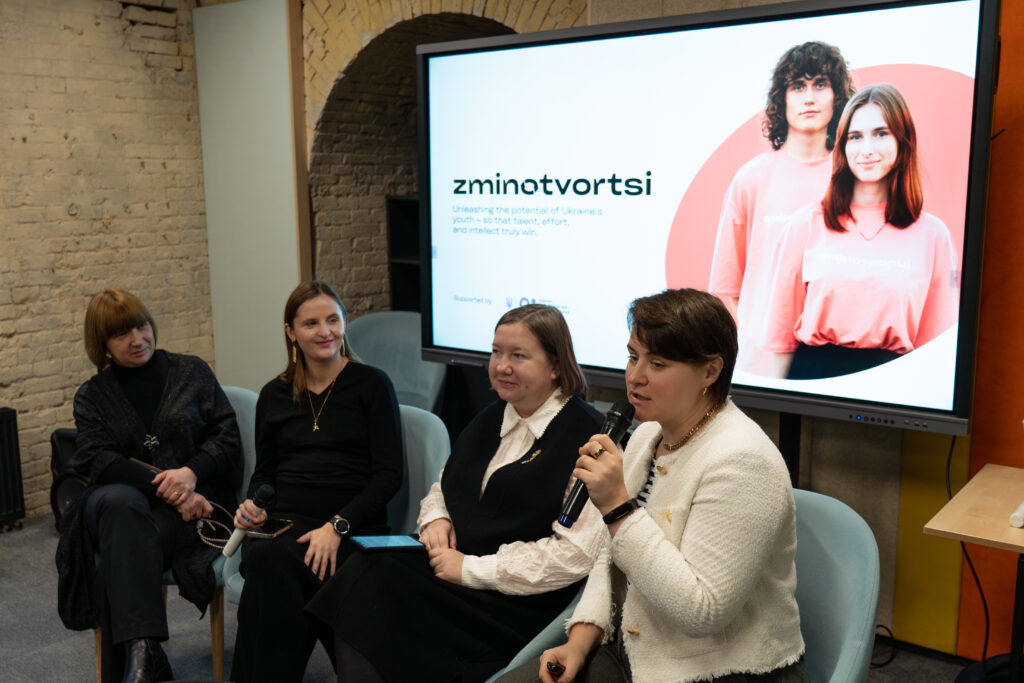
Inna Dzyndra, head of programming at Zminotvortsi (Changemakers), presented findings on education and youth attitudes.
Her team surveyed 7,300 teenagers in towns and villages across Ukraine and created an interactive analytical dashboard.
Concerning insights include:
- Only 40% of teenagers are confident they see their future in Ukraine.
- A majority believe that “it is impossible to earn significant money honestly in Ukraine.”
- Many think public officials join government for financial gain.
- A common belief is that “people with fewer resources are more moral than wealthy people.”
“Despite the fourth year of war, youth remain surprisingly optimistic about Ukraine’s future. But migration intentions and beliefs about corruption are a serious challenge for the state and society,” Dzindra said.
She also noted that teenagers from smaller communities are less inclined to emigrate than those from big cities — but they also have significantly fewer educational opportunities.
How Media Protect Cultural Heritage
Director of Detector Media Galyna Petrenko explained how Ukrainian journalists systematically document and expose crimes against cultural heritage.
She gave several important examples:
- Radio Liberty traced the path of museum collections stolen by Russian forces from Melitopol, Berdiansk, Mariupol, and Kherson — an investigation now cited by scholars and international institutions.
- Journalists uncovered the illegal demolition of a historic 19th-century mansion in Kyiv, leading to a criminal investigation and the building’s inclusion in the state register.
- Media closely track appointments in culture and information security — for example, after journalists highlighted concerns, the Ministry of Culture dismissed an official with a pro-Russian background.
“Media force politicians to react. There are cases when decisions changed the very next day after our publication,” Petrenko said.



1000 Hours of Content: Opportunity or Risk?
Part of the discussion focused on the new state programme to produce 1,000 hours of Ukrainian cultural content, with a budget of 4 billion UAH.
Experts agreed that the programme could strengthen Ukraine’s cultural resilience — but only if implemented transparently, inclusively, and using modern formats.
“It is a huge amount of money, but not enough to replace even one Russian cartoon like Masha and the Bear, one season of which costs six million dollars,” Sagaidak stressed.
Petrenko and Dzindra also highlighted that without youth engagement, TikTok-friendly formats, and strong scriptwriting, the programme risks losing its effectiveness.
Culture as National Security
The speakers agreed: cultural policy has already become a part of Ukraine’s national security — but state budgets and institutional practices have yet to catch up with this reality.
“Ukraine is a democracy. And while no alternative system exists, the responsibility lies with civil society, journalists, and young people. Preserving culture means preserving the future,” concluded the moderator of the event, Oleksandra Romantsova, Executive Director of the Center for Civil Liberties.